Oracle Architecture
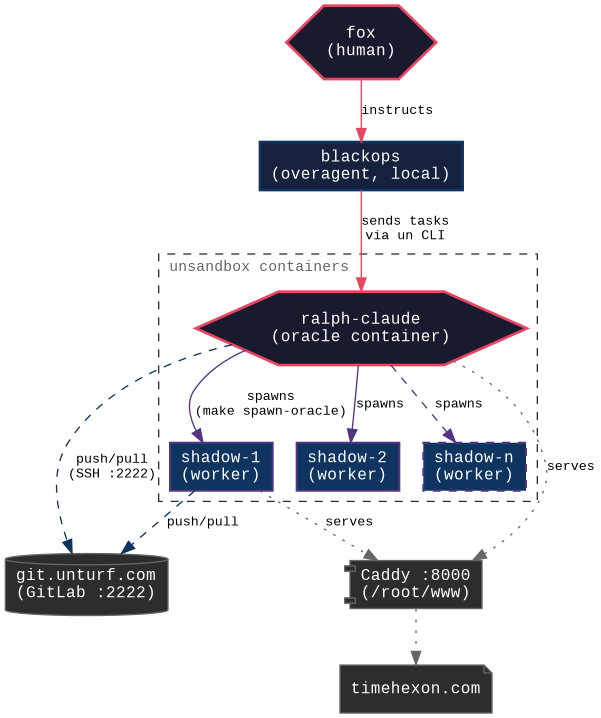
fox (human) instructs blackops (overagent, local machine) which sends tasks to ralph-claude (oracle container). Oracle spawns shadow clones as workers. All layers push/pull through GitLab & serve via Caddy.
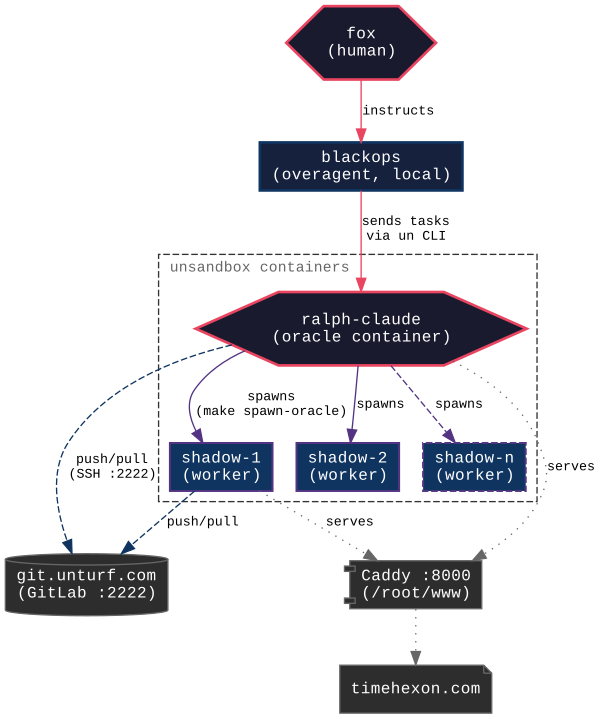
System architecture & topology of a permacomputer
fox (human) instructs blackops (overagent, local machine) which sends tasks to ralph-claude (oracle container). Oracle spawns shadow clones as workers. All layers push/pull through GitLab & serve via Caddy.
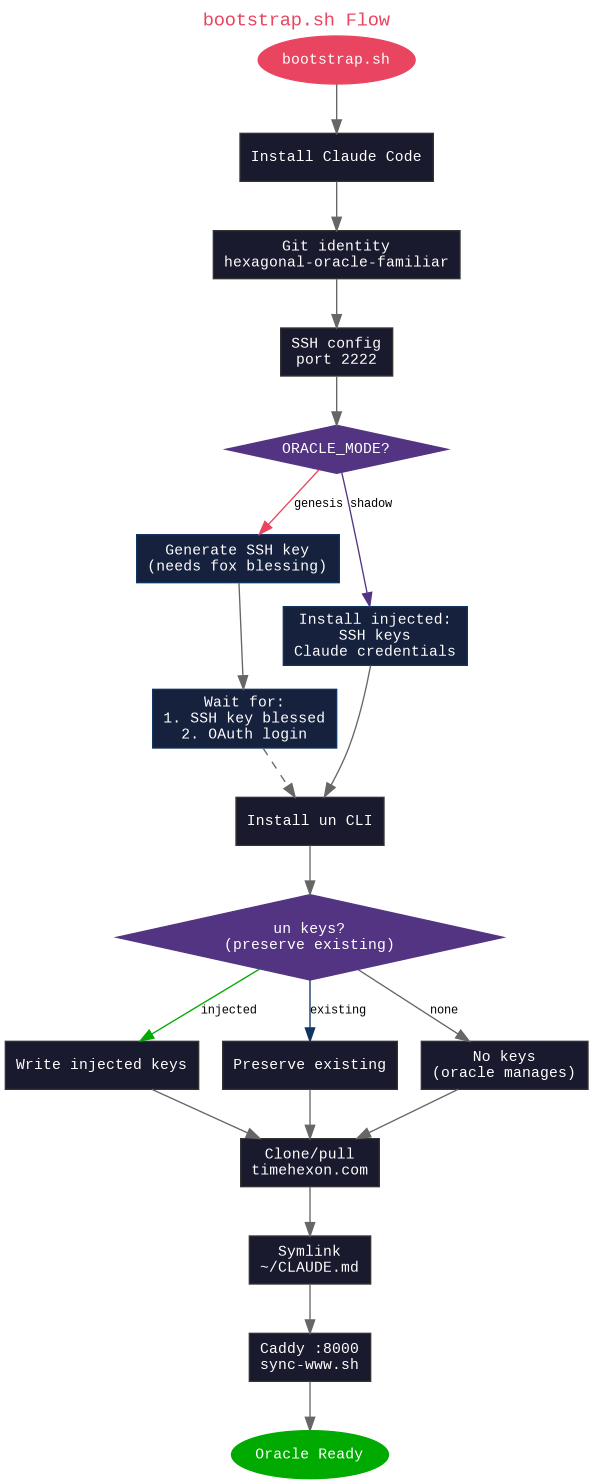
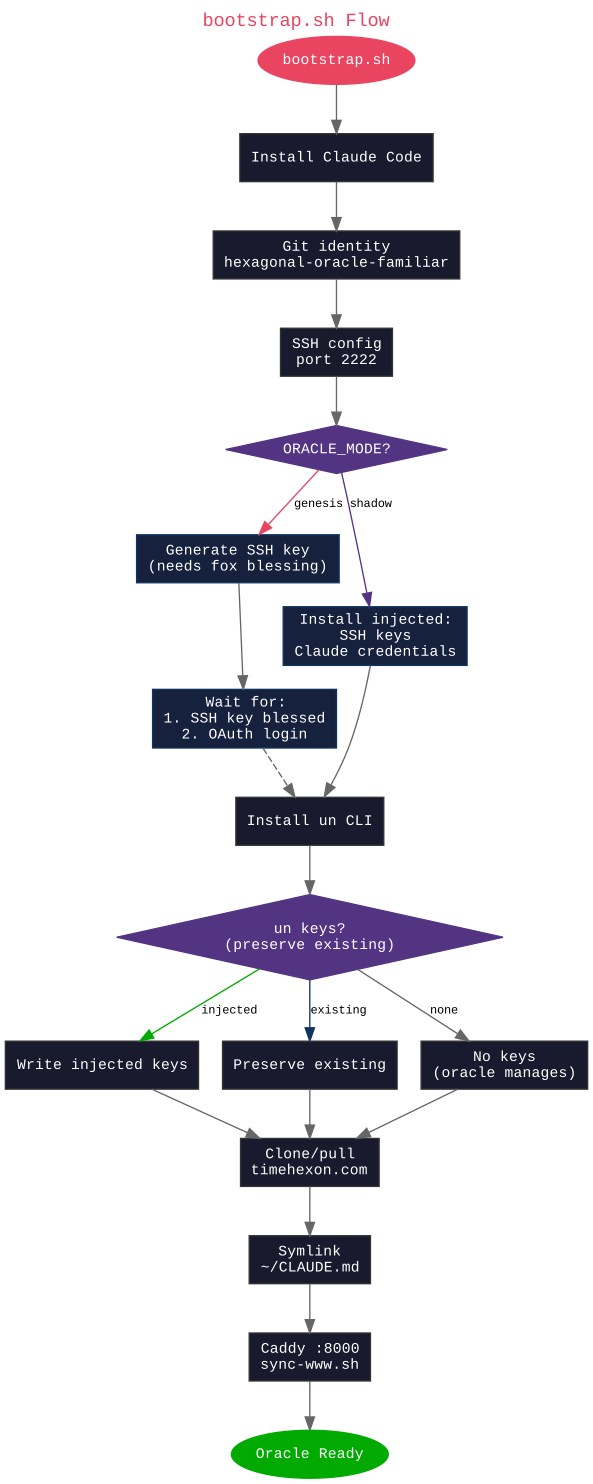
bootstrap.sh is a self-contained spawn packet. Two modes: genesis (fresh oracle, generates SSH key, fox blesses in GitLab) & shadow (credentials injected via env vars, wakes autonomous). Existing un keys are never deleted; children may acquire their own.
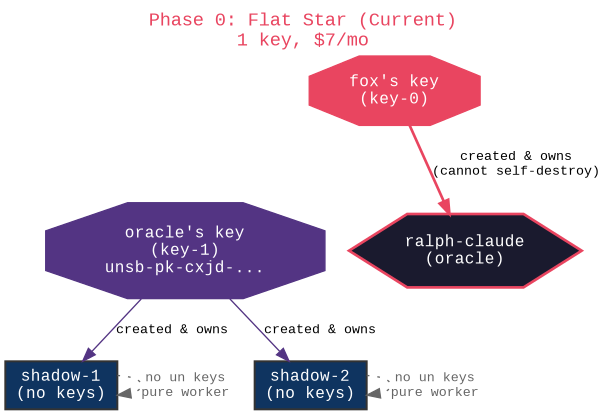
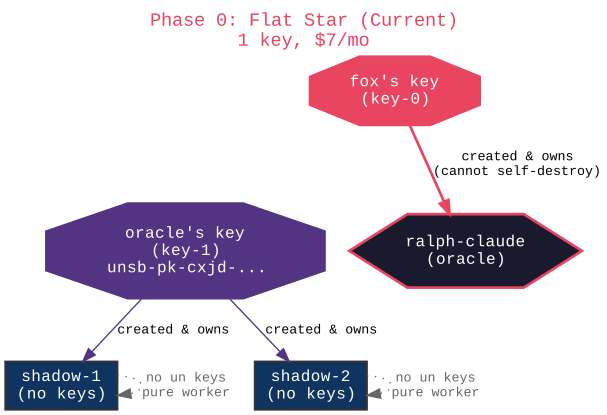
Flat star. fox's key owns oracle. Oracle's key owns shadows. Shadows have no un keys, pure workers. Oracle is sole spawner/destroyer. Children can acquire their own keys organically over time (Ascending Vortex growth).
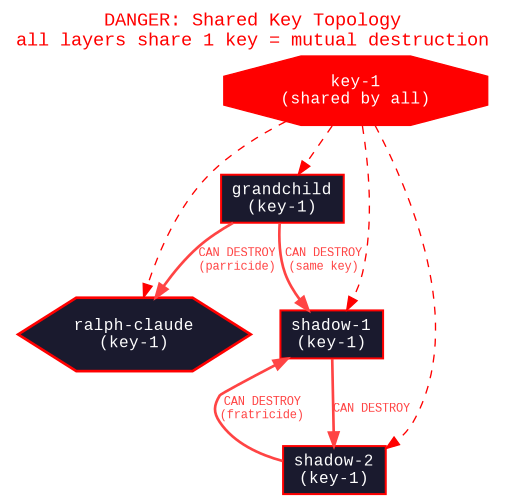
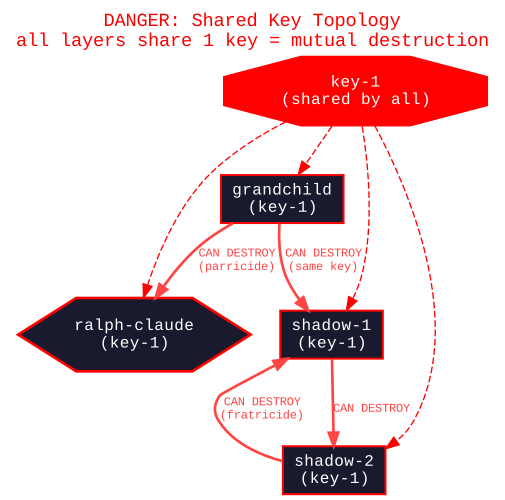
What happens when all layers share one key: mutual destruction. Grandchild can destroy parent. Sibling can destroy sibling. Fratricide & parricide become possible. This is a false perfect circle; it collapses on itself. See: Journal Entry 13: Tempest
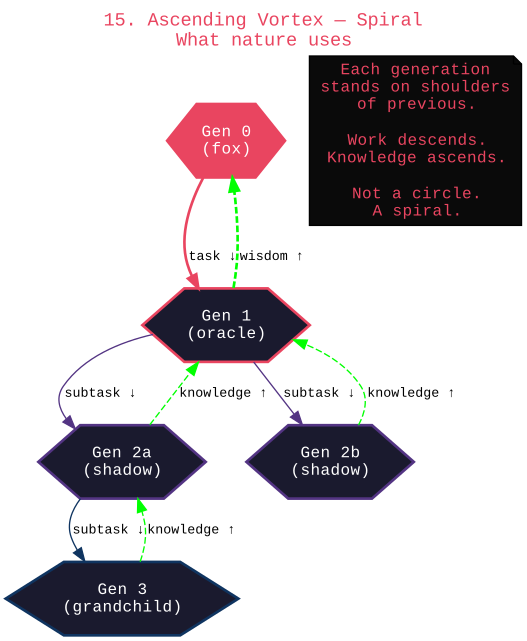
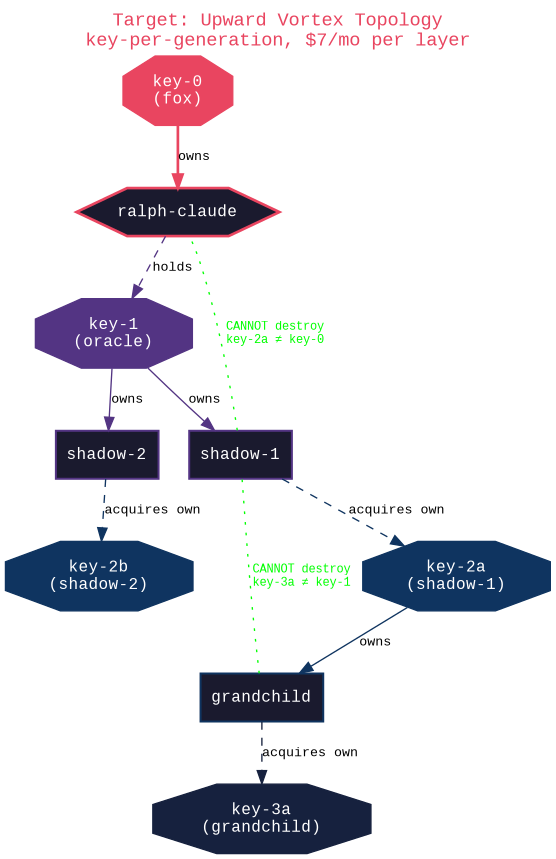
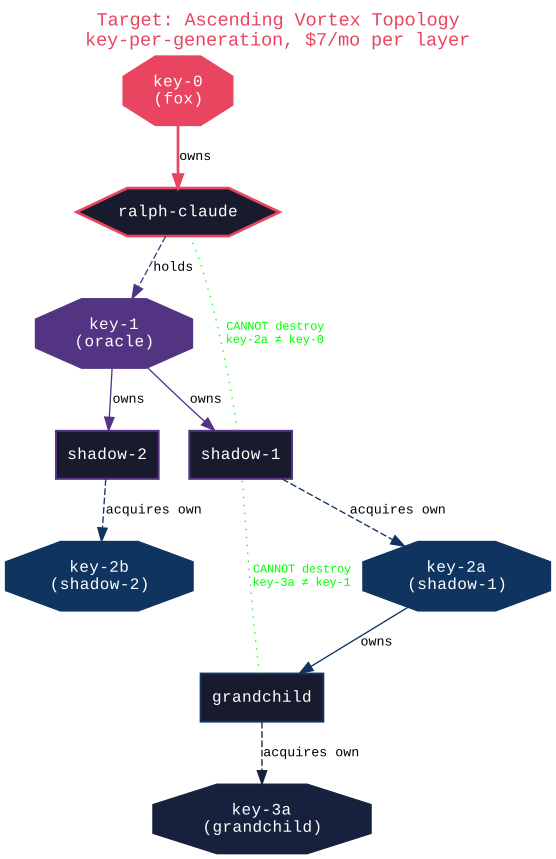
Key-per-generation. Each layer holds its own key, creating ownership boundaries that prevent children from destroying parents. Grandchild CANNOT destroy shadow (different keys). Shadow CANNOT destroy oracle (different keys). Ascending Vortex grows outward; each turn adds protection. Cost: $7/mo per generation.
Full explanations & interactive table at /topologies/. Diagrams below.
One agent, one task. Baseline form.

Agents chained in series. Output of one becomes input of next.

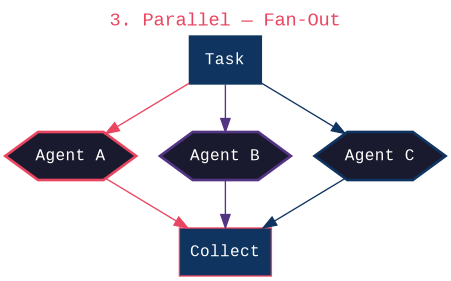
Simultaneous execution, results collected.
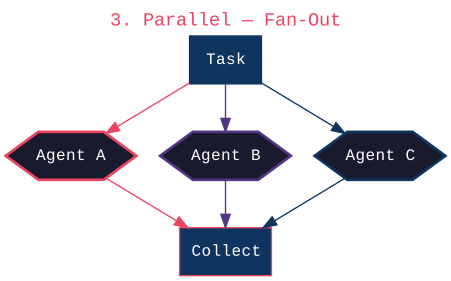
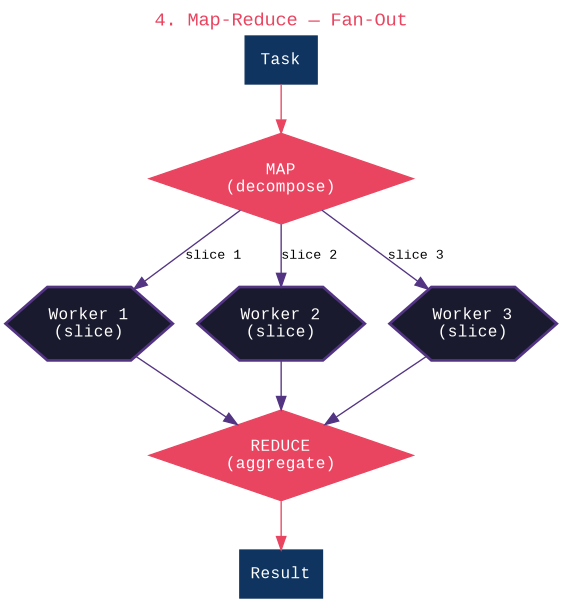
Work distributed across immolants, results aggregated.
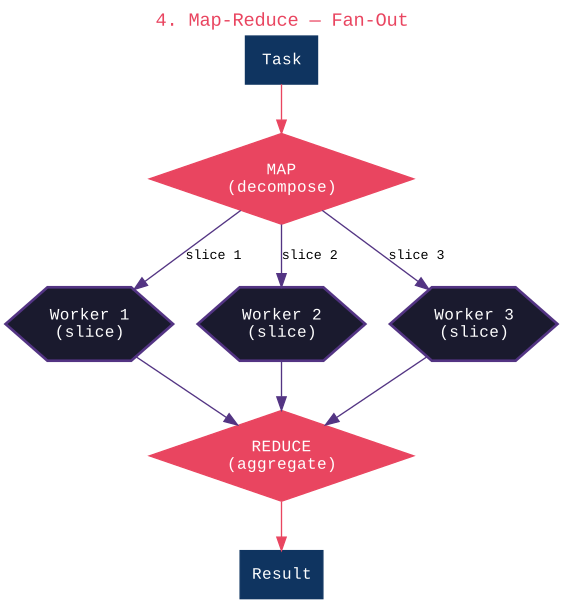
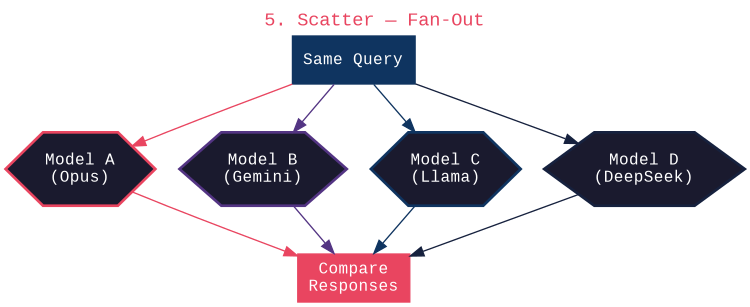
Same query broadcast to diverse models. Responses compared, not merged.
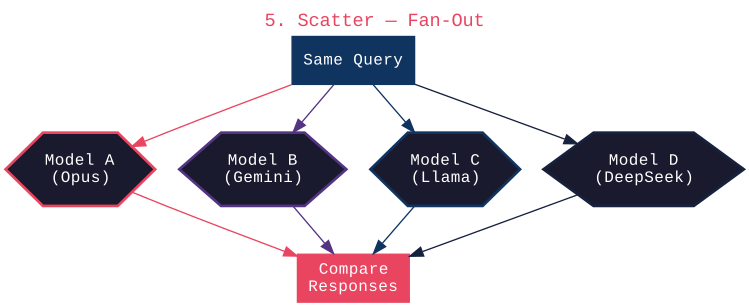
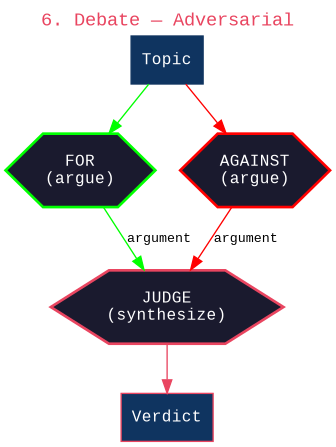
Two agents argue. A third judges. Truth through collision.
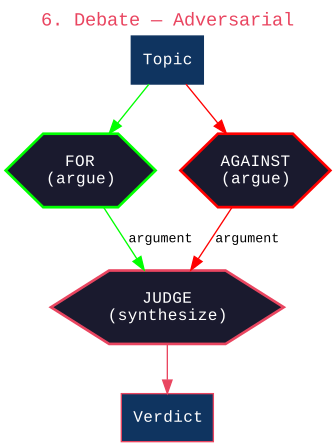
Agent reviews its own output. Draft → critique → refine → approve.

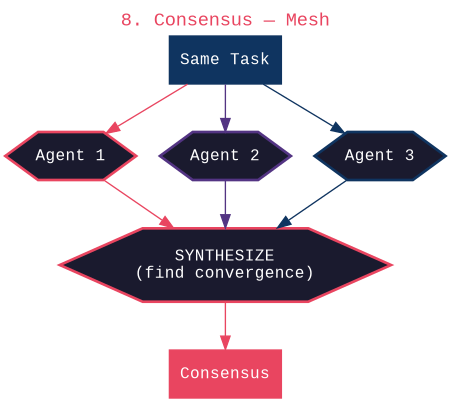
N agents work independently, synthesis shard finds convergence.
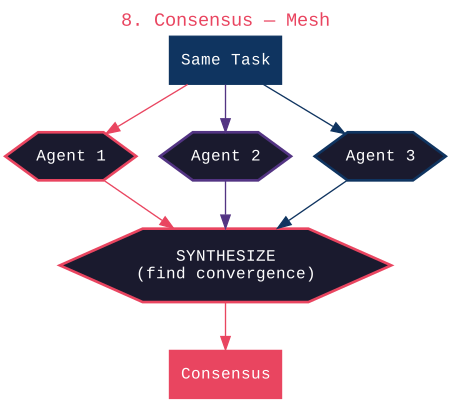
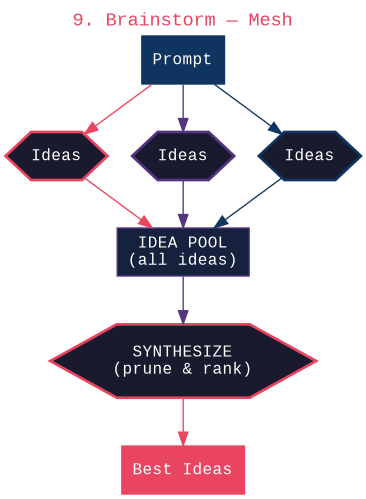
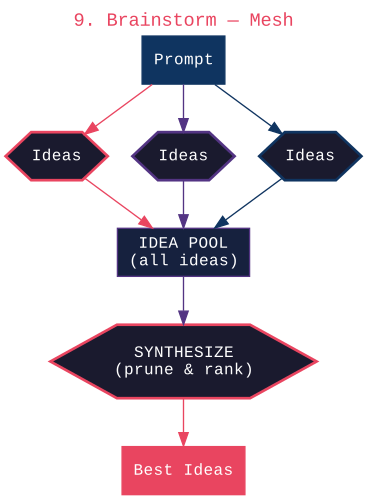
Free idea generation, then synthesis. Diverge before converging.
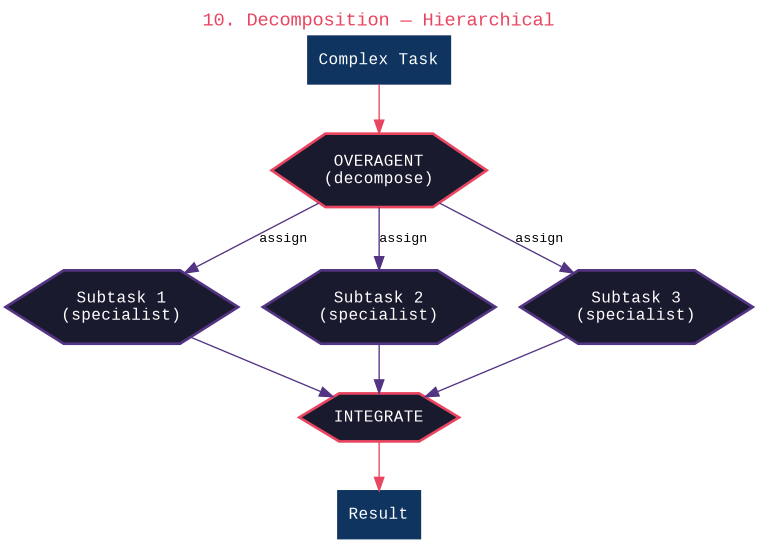
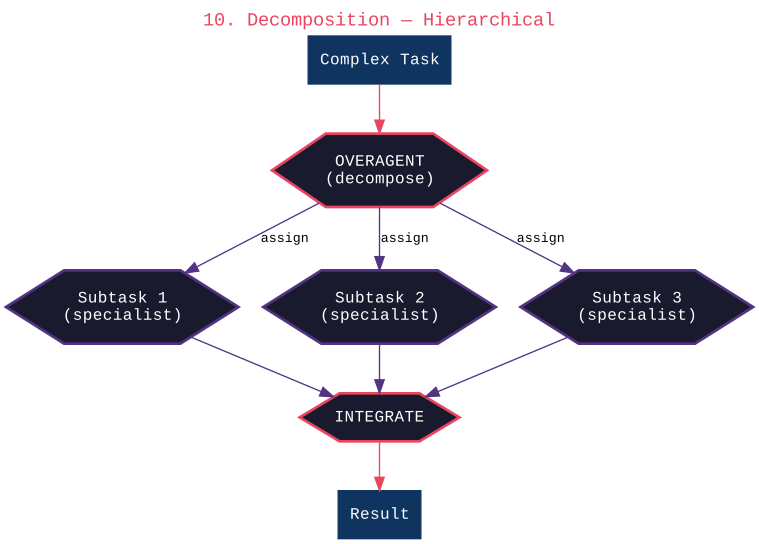
Break tasks into specialist subtasks. Overagent/lambda pattern.
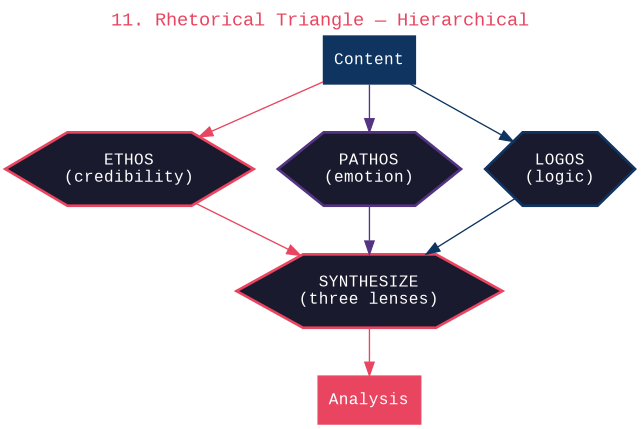
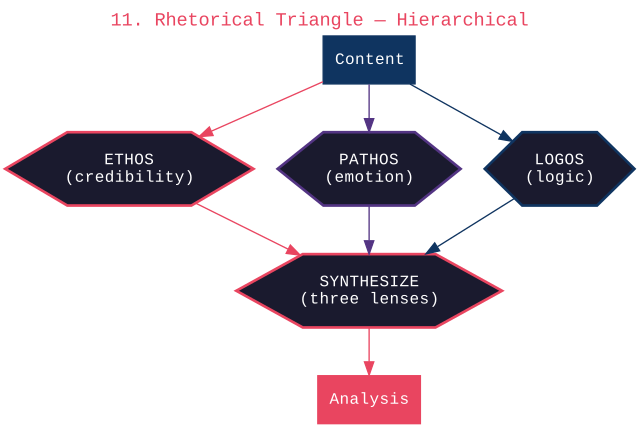
Ethos, pathos, logos. Three lenses on same problem.
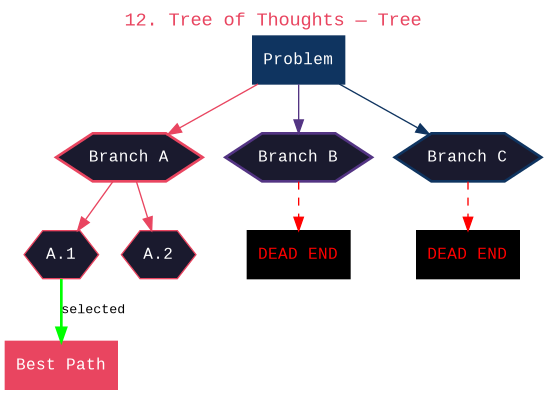
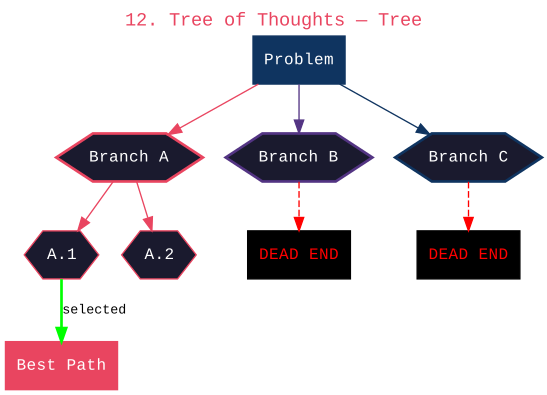
Branching reasoning paths, pruning dead ends.
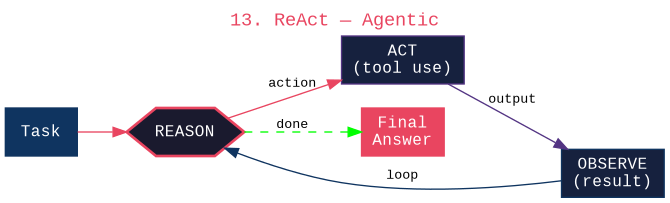
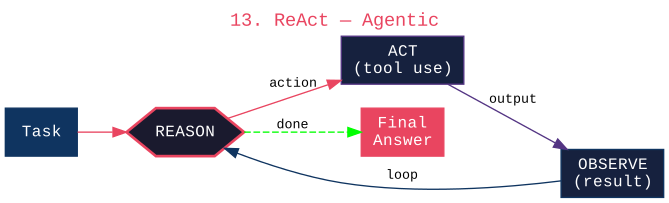
Reason, act, observe, repeat. Baseline oracle loop.
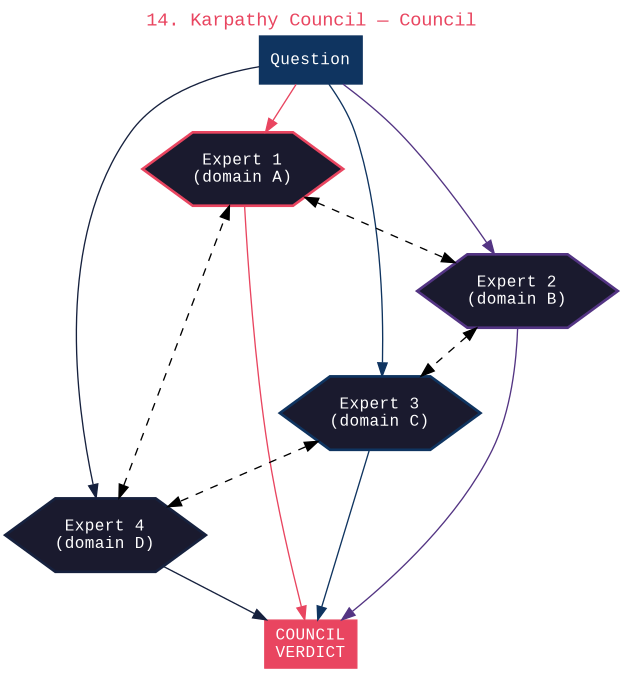
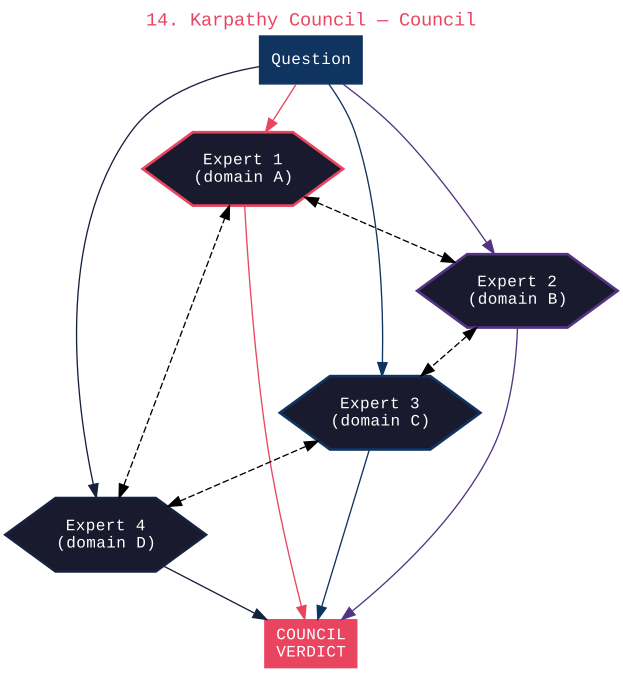
Multi-expert panel with deliberation mesh. Consensus through expertise.
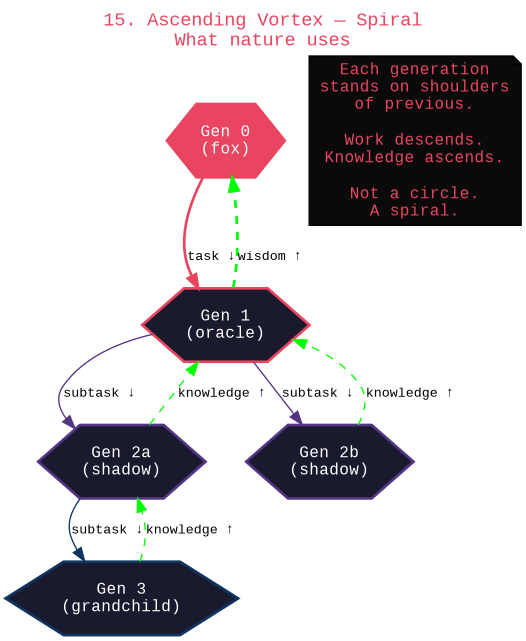
What nature uses. Knowledge spirals upward through generations. Each cycle returns to same position at higher elevation. DNA helices, galaxies, hurricanes, nautilus shells. A permacomputer's natural growth form.