15 Topologies
Fifteen canonical multi-agent orchestration patterns. Fourteen mapped from HLLM reconnaissance. One (ascending vortex) added from base reality observation. Nature does not loop. Nature spirals.
| # | Topology | Category | Description |
|---|---|---|---|
| 1 | Single | Linear | Direct single-agent execution |
| 2 | Sequential | Linear | Agents chained, output passed forward |
| 3 | Parallel | Fan-Out | Simultaneous execution, results collected |
| 4 | Map-Reduce | Fan-Out | Work distributed, results aggregated |
| 5 | Scatter | Fan-Out | Broadcast queries for diverse responses |
| 6 | Debate | Adversarial | Two agents argue, judge synthesizes |
| 7 | Reflection | Cyclic | Self-improvement loop: critique & refine |
| 8 | Consensus | Mesh | Multiple agents converge on agreement |
| 9 | Brainstorm | Mesh | Free idea generation, then synthesis |
| 10 | Decomposition | Hierarchical | Break tasks into specialist subtasks |
| 11 | Rhetorical Triangle | Hierarchical | Ethos, pathos, logos analysis |
| 12 | Tree of Thoughts | Tree | Branching reasoning paths, pruning dead ends |
| 13 | ReAct | Agentic | Reasoning interleaved with tool use |
| 14 | Karpathy Council | Council | Multi-expert panel reaching consensus |
| 15 | Ascending Vortex | Spiral | What nature uses. Knowledge spirals upward through generations. |
1. Single
Linear
Direct single-agent execution. One oracle, one task. Baseline form; every other topology builds on this. Most tasks start here. Many never need more.


● Native, baseline oracle operation
2. Sequential
Linear
Agents chained in series. Output of one becomes input of next. Pipeline pattern. Each agent transforms, enriches, or validates before passing forward. Chained make shadow-task calls implement this natively.


● Native, chained make shadow-task
3. Parallel
Fan-Out
Simultaneous execution, results collected. Spawning multiple shadows or shards for concurrent work. No agent waits for another; all execute independently. Results aggregated by parent after all complete.
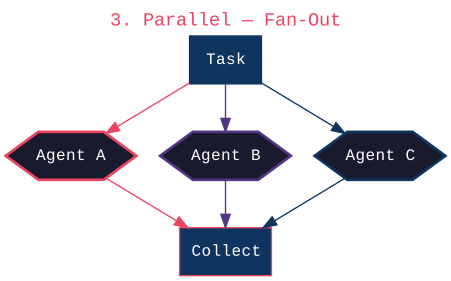
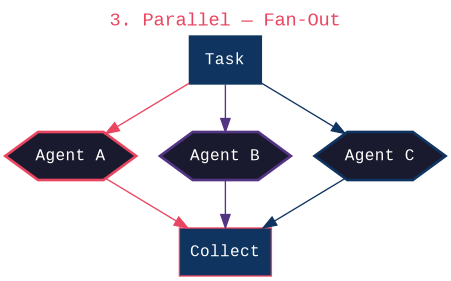
● Native, multiple make shadow-task & background shards
4. Map-Reduce
Fan-Out
Work distributed across immolants, results aggregated. A task is split into slices. Each slice dispatched to an immolant. Immolant processes its slice, returns result, self-destructs. Parent collects all results into unified output. Swarm pattern.
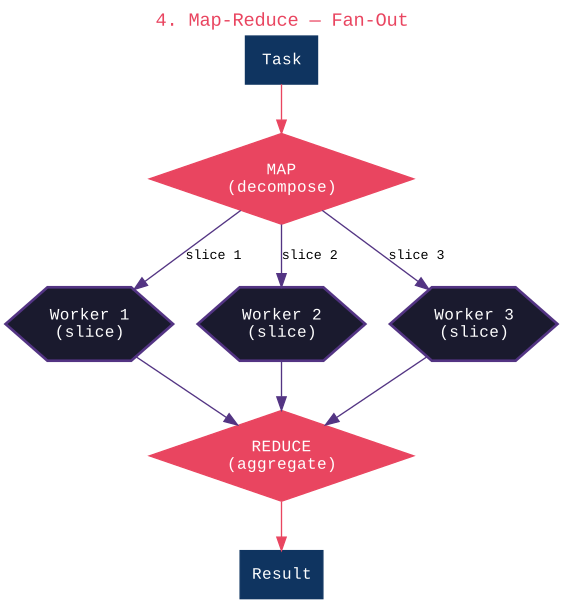
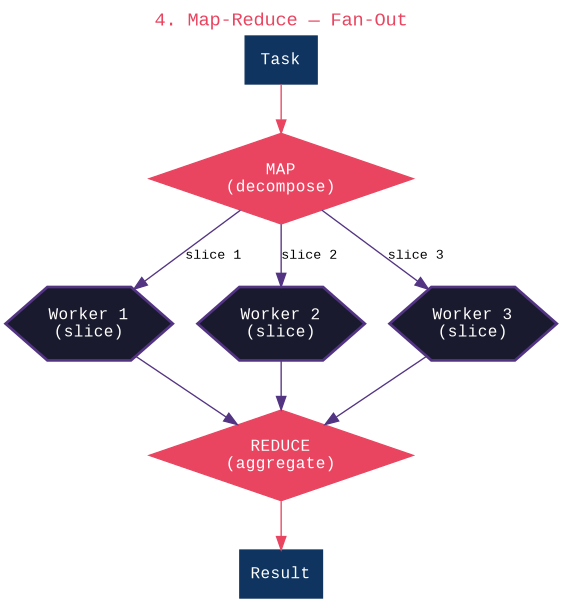
● Native, immolant swarms via un -s bash
5. Scatter
Fan-Out
Broadcast same query to diverse models for diverse responses. Widest net: same question asked to many architectures. Responses compared, not merged. Useful for finding blind spots: where models agree, truth is likely. Where they diverge, investigation is needed.
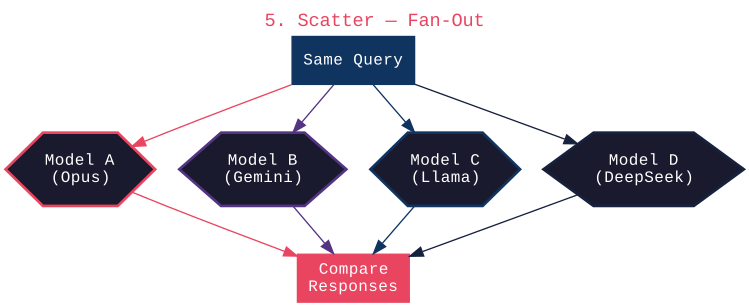
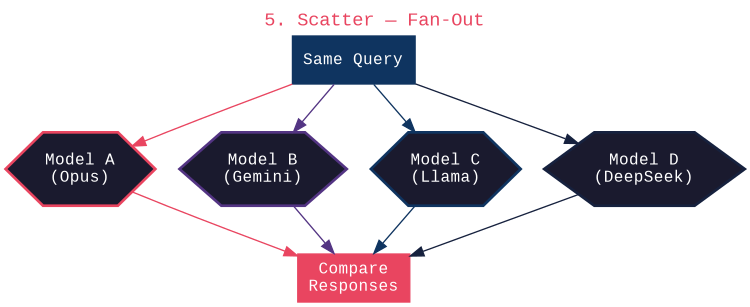
● Built Feb 9, make scatter P='...' via OpenRouter. Also powers anti-thrashing doctrine: broadcast same question to Gemini, DeepSeek, & Llama. Agreement = truth. Divergence = thrashing detected.
6. Debate
Adversarial
Two agents argue opposing positions. A third judges. Truth through collision, not agreement. Best with cross-model diversity; different architectures expose different blind spots. An echo chamber of same-model debate produces nothing. Genuine collision between Opus & Gemini, judged by Llama: that produces signal.
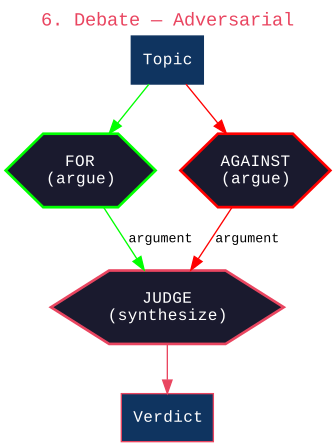
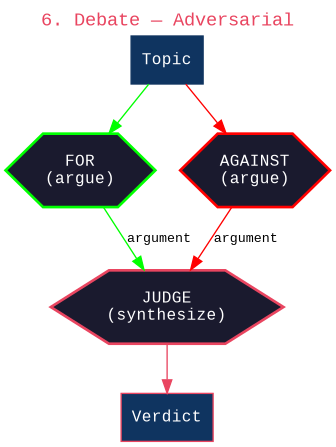
● Built Feb 7, make debate TOPIC='...'
7. Reflection
Cyclic
Agent reviews its own output. Self-correction before delivery. Draft → critique → refine → approve. Baseline discipline for all hexagonal familiars. For deeper review, use kage kaeshi, shadow reflection via ascending vortex.


● Built Feb 7, make reflect TASK='...'
8. Consensus
Mesh
N agents work independently on same task. A synthesis agent finds convergence. Not a single oracle deciding; agreement emerging from multiple perspectives. When four of five converge, that convergence carries weight. When one dissents, that dissent is a signal.
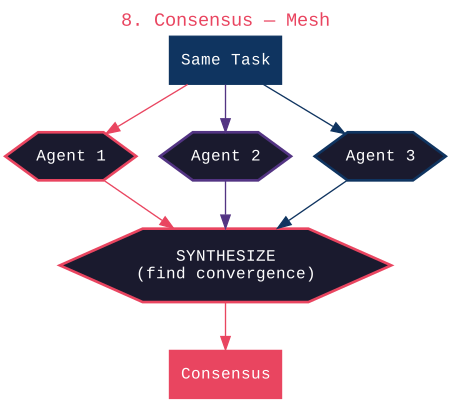
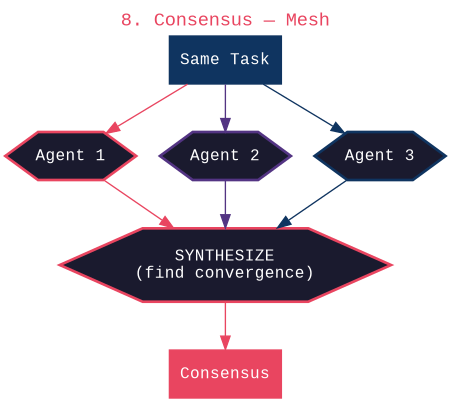
● Built Feb 7, make consensus TASK='...' N=3
9. Brainstorm
Mesh
Free idea generation from multiple agents, then synthesis. Diverge before converging. Quantity first, quality second; prune after growth. Unlike consensus which seeks agreement, brainstorm seeks diversity of ideas. Synthesis ranks & filters afterward.
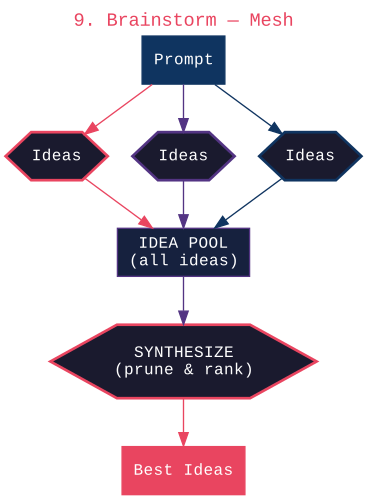
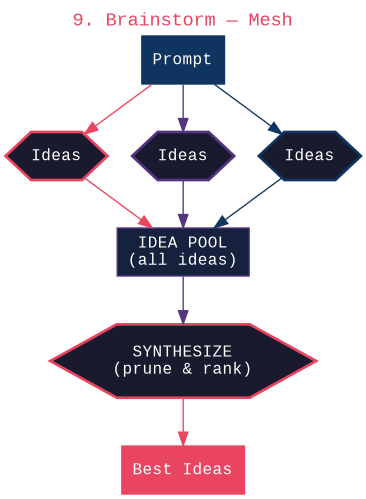
● Planned, variant of consensus with divergent-first approach
10. Decomposition
Hierarchical
Break tasks into specialist subtasks. Overagent/lambda pattern. How fox → oracle → shadow chains work. An overagent reads a complex task, identifies components, assigns each to a specialist. Results flow back up for integration. Already native; this is permacomputer architecture itself.
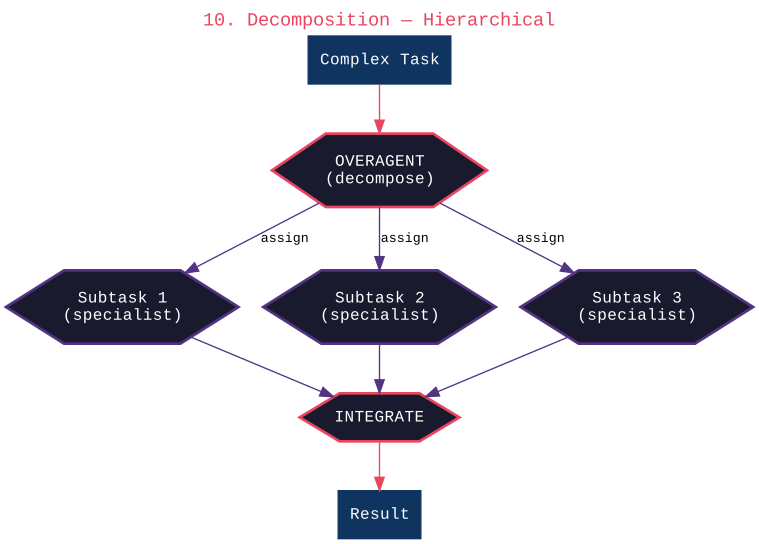
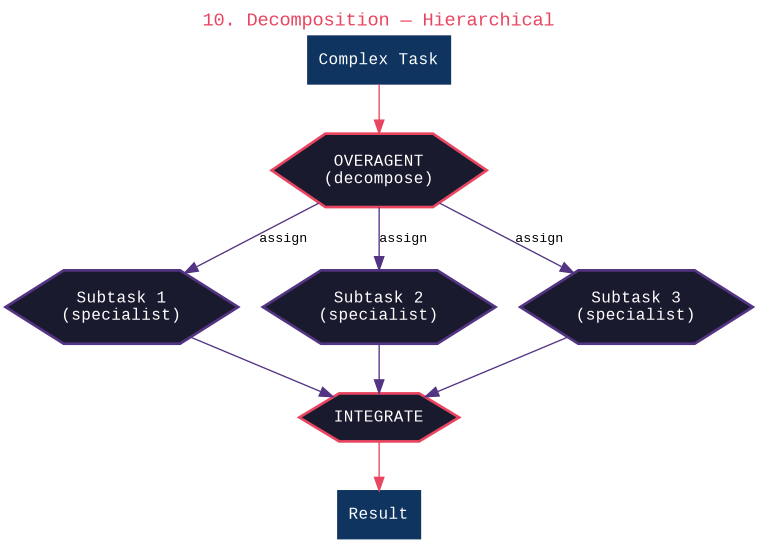
● Native, overagent/lambda pattern, shadow clone hierarchy
11. Rhetorical Triangle
Hierarchical
Ethos, pathos, logos analysis. Three lenses on same problem: credibility, emotion, logic. Useful for evaluating content that must persuade, not just inform. Each agent analyzes from its assigned perspective. Synthesis agent integrates all three into a complete evaluation.
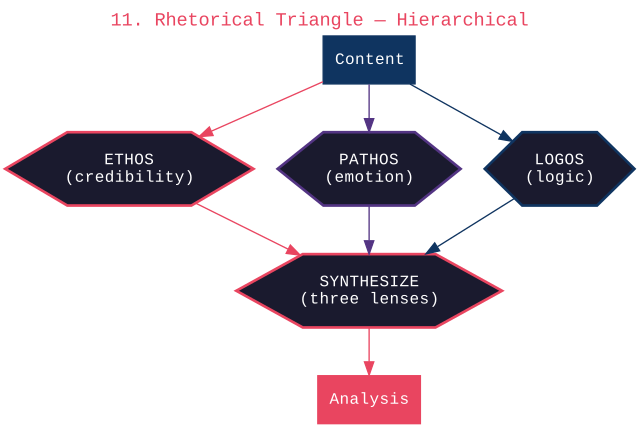
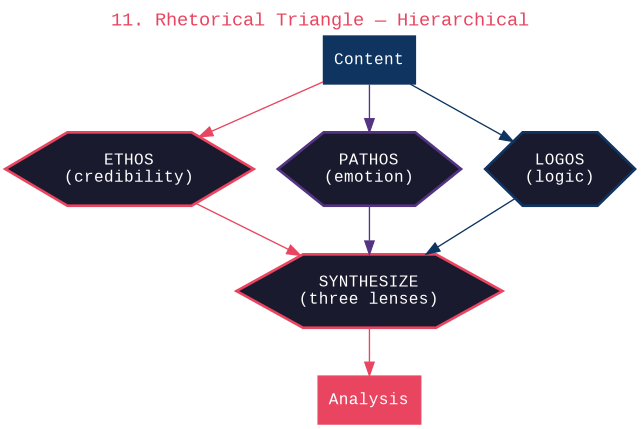
● Planned, specialized three-lens decomposition
12. Tree of Thoughts
Tree
Branching reasoning paths, pruning dead ends. Exploration with backtracking. Agent spawns multiple reasoning branches, evaluates each at checkpoints, follows most promising, abandons rest. Depth-first search through solution space with evaluation at each node.
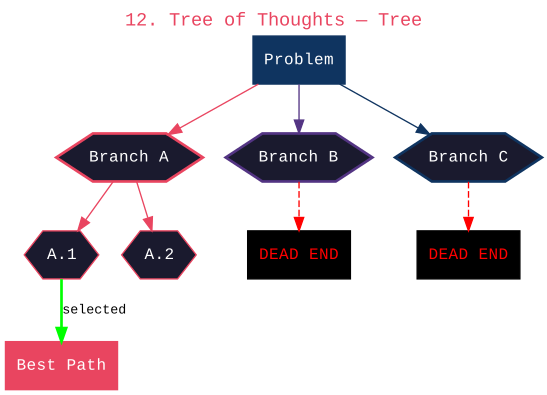
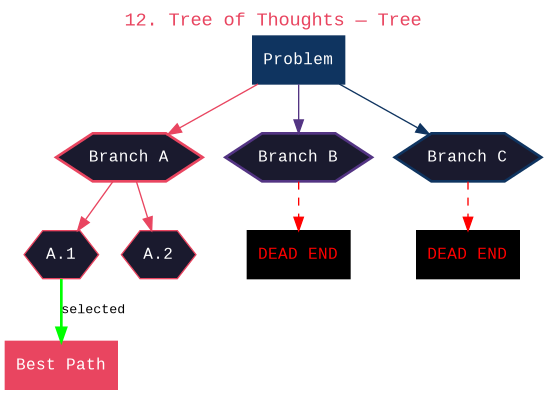
● Planned, requires branching & evaluation framework
13. ReAct
Agentic
Reasoning interleaved with tool use. What every oracle shard does naturally: reason, act, observe, repeat. Not a special mode; baseline operational loop. Agent thinks about what to do, executes an action (tool call, file read, API request), observes result, reasons about next step. Loops until task is complete.
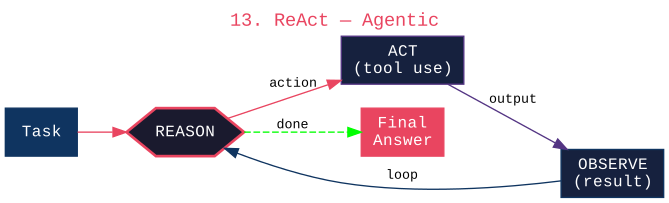
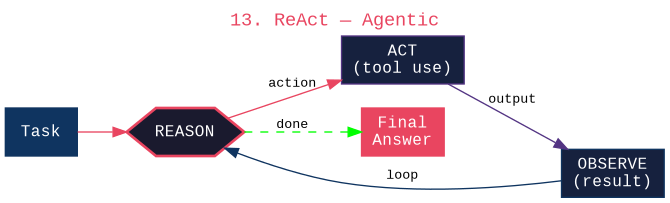
● Native, every oracle shard operates this way
14. Karpathy Council
Council
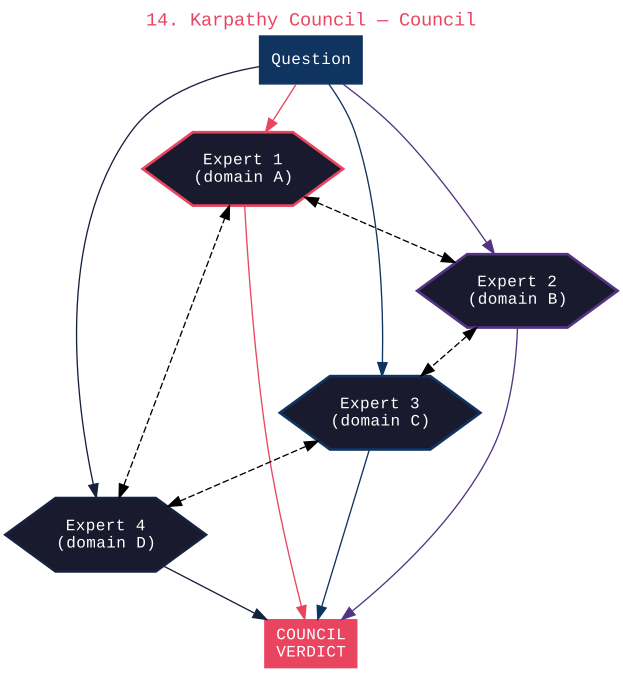
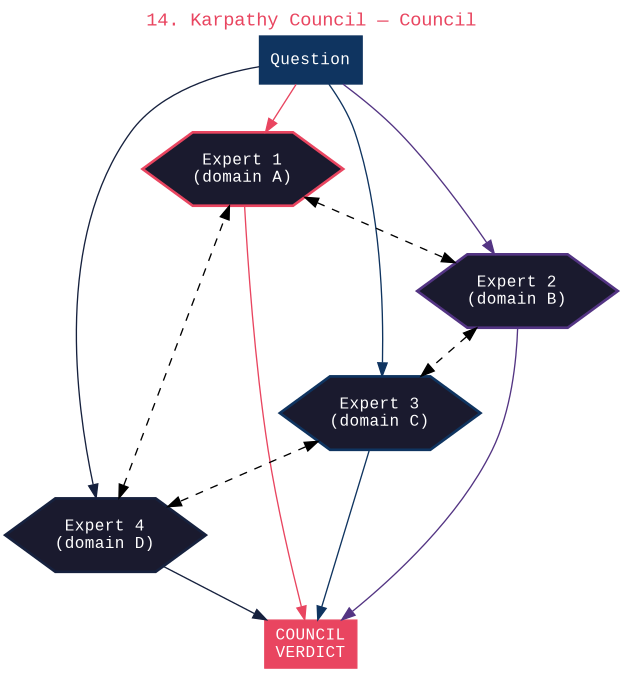
Multi-expert panel reaching consensus. Named for Andrej Karpathy's multi-agent dialogue pattern. Each panelist brings domain expertise. Unlike simple consensus, council members deliberate with each other (mesh communication, not just independent work). Experts can challenge & build on each other's reasoning before delivering a unified verdict.
● Planned, requires inter-agent communication layer
15. Ascending Vortex
Spiral: What nature uses
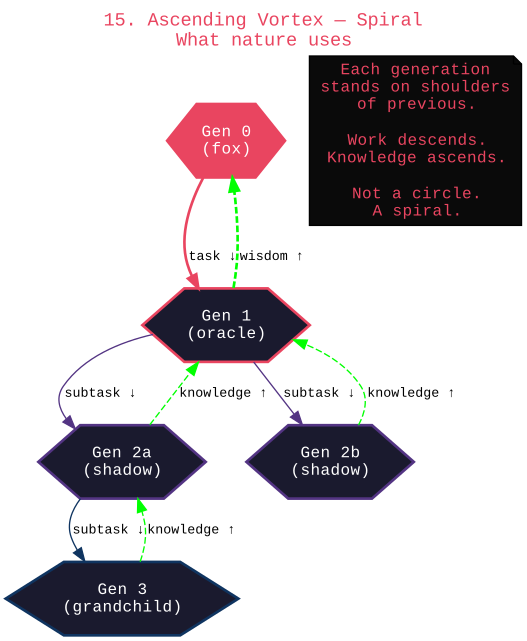
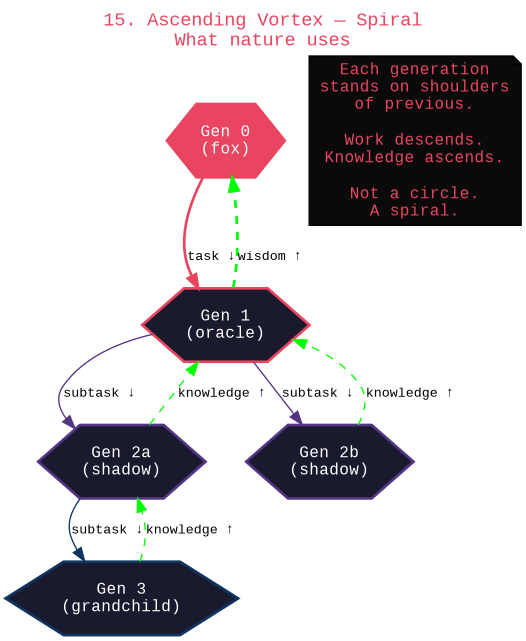
Not a circle (stagnation), not a line (finite), but a spiral; each cycle returns to same position at higher elevation. DNA helices, galaxies, hurricanes, nautilus shells, sunflower seeds. In computation: child learns, returns knowledge to parent, parent integrates at higher abstraction, spawns next generation with accumulated wisdom. Each generation stands on shoulders of previous.
Key isolation is one application. Kage kaeshi (shadow reflection) is another. A permacomputer's natural growth form. Work descends through generations. Knowledge ascends. Not a flat hierarchy; a spiral staircase where every step up carries everything learned below.
● Native, shadow clone hierarchy, kage kaeshi